About Me
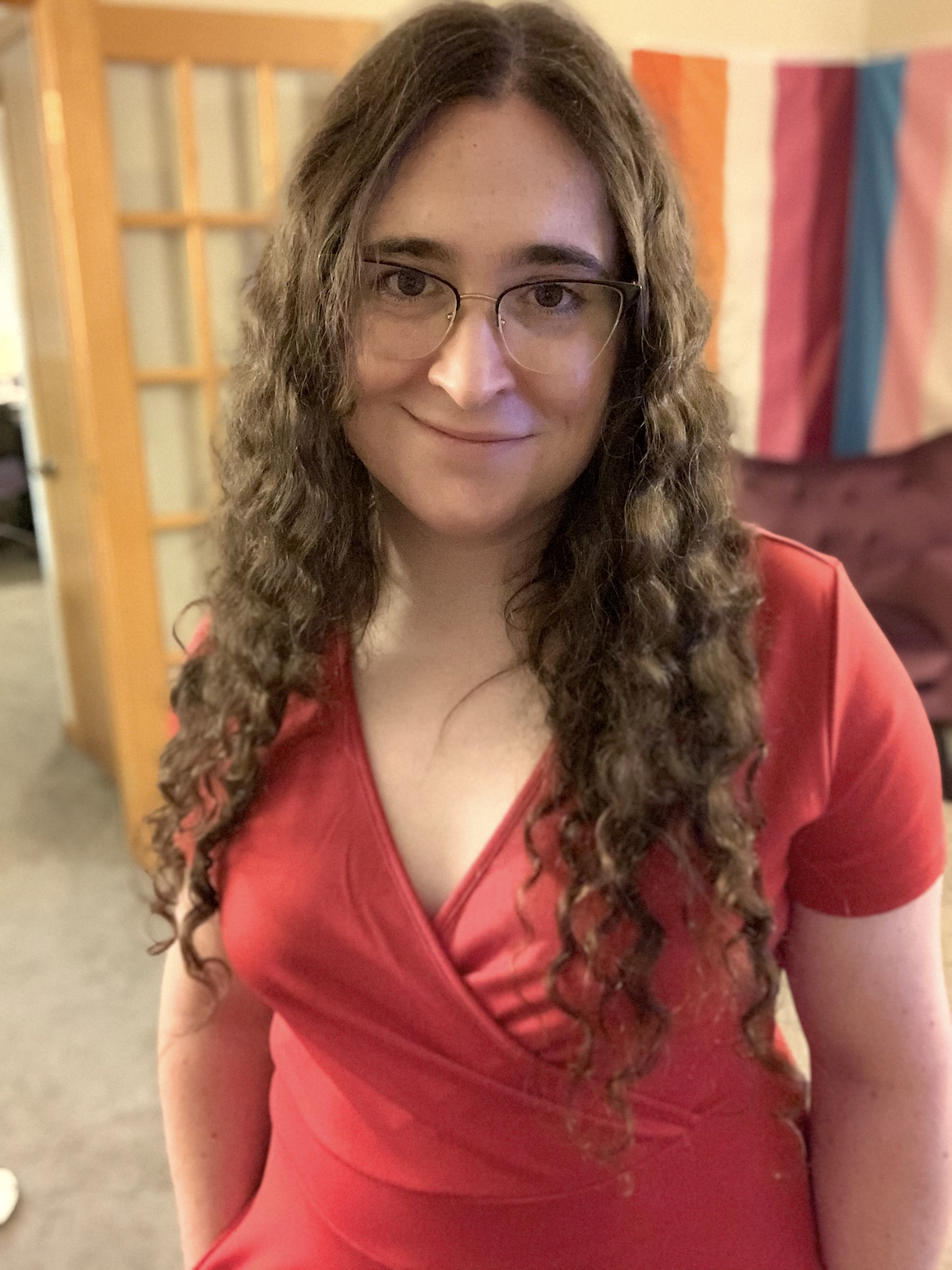
Hi, I’m Michael Ann (she/her)! I am an Assistant Professor of Computer Science and Communication Studies at Northeastern University. I direct the Sociotechnical Equity and Agency Lab, where we take a transfeminist, community-focused, HCI-based approach to responsible AI and machine learning in the context of social computing systems.
I am currently building out my lab and am open to new collaborations, especially around Human-Centered Machine Learning & AI, health, and AI/ML policy/regulation. I primarily train students in qualitative computer science, design, and critical methods.
In Spring 2024, I will be teaching CS 4973/6983: Understanding Users at Northeastern!
I am an interdisciplinary social/behavioral scientist working in Human-Computer Interaction and Social Computing. I specialize in Human-Artificial Intelligence Collaboration in the context of social systems, especially social platforms. My research closes gaps in understanding between users and AI-driven social systems to enable sustainable, intentional, and mutually beneficial Human-AI collaboration. I develop and employ in-depth, qualitative, participatory methods to examine and address friction and distrust-inducing disconnects, often in the context of marginalized identity and communities. I contribute both new theory and practical design implications, drawing from and building on work in Human-Centered Computing (HCC), Computer Supported Cooperative Work (CSCW), Computer Mediated Communication (CMC), Social Computing, and Cognitive Psychology.
I do much of this work as a member-researcher, bringing my research expertise to communities that I am a part of, such as the LGBTQ+ community. I embrace my identity as a transgender woman, lesbian, and neurodivergent person in my research, and encourage others to do the same. I also mentor junior researchers who want to learn how to do this kind of research in their own marginalized communities.
In the very small sliver of my life that exists outside the bounds of academia, I’m mostly into cats (all kinds), robots (friendly), space (outer), guitar (loud), and overly-involved roleplaying games (wizards).
Latest News
- Exciting news: this fall, I’m moving to Boston and joining Northeastern University as a tenure-track Assistant Professor, cross-appointed to Computer Science and Communication Studies
- I’ve joined the CHI 2023 Program Committee as an AC, and I’m very excited about helping execute the newly-revised R&R process.
- Exciting news! If you’re coming to CSCW 2021, you’re going to be treated to a barnburner of a panel. Look out for “Do We Fix it or Burn it Down? Towards Practicable Critique at CSCW,” moderated by my friend and colleague Jacob Thebault-Spieker, featuring myself and some of my favorite researchers: Stevie Chancellor, Niloufar Salehi, Alex Leavitt,, Katta Spiel, and David Karger.
- I’m happy to announce that I am now part of the CSCW 2022 Program Committee – excited to help shepherd amazing new work in my field!
- I’m extremely proud to announce that the bulk of my dissertation will be part of CSCW 2021 and the October issue of PACMHCI as “Adaptive Folk Theorization as a Path to Algorithmic Literacy on Changing Platforms”
- I’m happy to announce that I have joined the CSCW 2021 program committee.
- I’ll have two new papers out at CSCW 2021, a new first-author “Values (Mis)alignment: Exploring Tensions Between Perceived Platform and LGBTQ+ Community Design Values” with my team from Northwestern, and “‘Facebook Promotes More Harassment:’ Social Media Ecosystem, Skill, and Marginalized Hijra Identity in Bangladesh” with Fakiya Nova and her team at Marquette.
Latest Publications
“A Source of Hope Online”: Membership Curation by Staff to Protect Guarded Cliques Limits Access to Resources for Marginalized Communities on Discord
Erika Melder, Emma Vonbuelow, Ada Lerner, and Michael Ann DeVito. 2026. “A Source of Hope Online”: Membership Curation by Staff to Protect Guarded Cliques Limits Access to Resources for Marginalized Communities on Discord. Proc. ACM Hum.-Comput. Interact. 10, 2, Article CSCW002 (April 2026), 20 pages. https://doi.org/10.1145/3788038
The Pit Beneath the Town Square: How Digital Solastalgia Affects Platform Migration and Community Structures of Transfeminine Users
Erika Melder, Veronica E. Rubinsztain, Jiaqi Li, Emma Vonbuelow, and Michael Ann DeVito. 2026. The Pit Beneath the Town Square: How Digital Solastalgia Affects Platform Migration and Community Structures of Transfeminine Users. In Proceedings of the 2026 CHI Conference on Human Factors in Com- puting Systems (CHI ’26), April 13–17, 2026, Barcelona, Spain. ACM, New York, NY, USA, 17 pages. https://doi.org/10.1145/3772318.3791112
“I can take what I want and adapt as needed”: BIPOC Identity Making and Resistance Through Internet Aesthetics on TikTok
Natalie Chen, Gianna Williams, Alexandra To, and Michael Ann DeVito. 2026. “I can take what I want and adapt as needed”: BIPOC Identity Making and Resistance Through Internet Aesthetics on TikTok. In Proceedings of the 2026 CHI Conference on Human Factors in Computing Systems (CHI ’26), April 13–17, 2026, Barcelona, Spain. ACM, New York, NY, USA, 17 pages. https://doi.org/10.1145/3772318.3790948
“How would I know what I would want from or with them?”: Supporting A-Spec Approaches to Developing Relationships Through Online Platforms
Kelly Wang, Ashlee Milton, Leah Namisa Rosenbloom, Erika Melder, Ada Lerner, and Michael Ann DeVito. 2026. “How would I know what I would want from or with them?’: Supporting A-Spec Approaches to Developing Relationships Through Online Platforms. In Proceedings of the 2026 CHI Conference on Human Factors in Computing Systems (CHI ’26), April 13–17, 2026, Barcelona, Spain. ACM, New York, NY, USA, 20 pages. https://doi.org/10.1145/3772318.3791253
Transphobia is in the Eye of the Prompter: Trans-Centered Perspectives on Large Language Models
Morgan Scheuerman, Katy Weathington, Adrian Petterson, Dylan Thomas Doyle, Dipto Das, Michael Ann DeVito, and Jed R. Brubaker. 2025. Transphobia is in the Eye of the Prompter: Trans-Centered Perspectives on Large Language Models. ACM Trans. Comput.-Hum. Interact. Just Accepted (June 2025). https://doi.org/10.1145/3743676

